|
|
|

|
|
|
On-Screen Keyboard Template |
|
|
|
|
Introduction |
|
|
On-Screen Keyboard
Template for Clarion 5-10... ABC/Legacy. This
is a white box template which instantly
enables Windows' on-screen keyboard
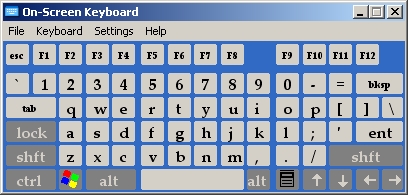
(osk.exe) in all prompts of your application. Here's a screenshot on the right.
So if you want to build a touch-screen application, or just allow your customers do everything with a mouse, this template is for you! To test it, please download the demo or just run osk from the Start->Run |

|
| Our on-Screen Keyboard template is just a wrapper for Windows On-Screen Keyboard. | |
| So if you want to decide quickly whether this template is going to work for you, please | |
| launch the on-screen keyboard on top of your application. Usually it can be found here: | |
| Start - Programs - Accessories - Accessibility - On-Screen Keyboard. | |
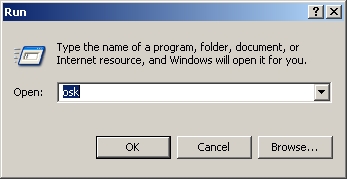
| Or, if you are "DOS-kinda-guy", just run osk from Start - Run: | |
 |
|
| The template functions to enable this keyboard in all application procedures | |
| in a matter of seconds. We don't want to spoil it for you so just play | |
| with the keyboard settings to see what it can do. | |
| Those are just 2 possible views: | |
 |
|
 |
|
| Main advantages: | |
|
|
Installation |
|
| Run the installation wizard. It will guide you through a few simple steps. That is it. | |
| IMPORTANT: If you are using Clarion 5-6, after selecting Clarion5-Clarion6 directory wizard | |
| will offer to install it into C:\Clarion5(6)\Clarion8 or C:\C55\Clarion8 directory respectively. | |
| So don't forget to remove the last \Clarion8. But even if you do - no problem. | |
| Just uninstall the template and re-run the installation. | |
| To start using the template you need to manually register it. | |
| To do this: Open Clarion (no application must be open). | |
| Go to menu Tools (Setup) -> (Edit) Template Registry -> Register. | |
| Select new template onscreen.tpl and then hit Open button. | |
| You can find it in Clarion7(8,9,10...)\accessory\template\win | |
| for Clarion 7 and in Clarion*\Template - for all others. | |
| View our animated reminder on how to do this - Registering Template | |
| (built with our JAVA Animated Help Builder). | |
|
|
|
| Template usage is very straightforward. | |
| 1. Open Global -> Extensions and insert On-Screen Keyboard Global template. | |
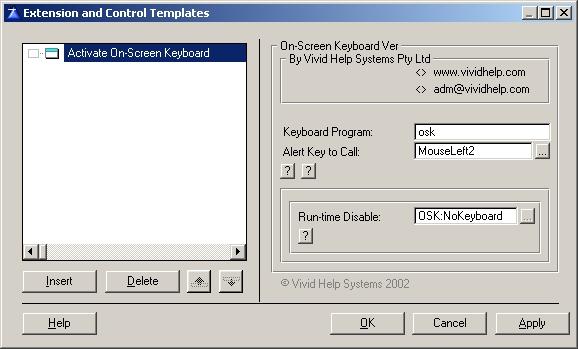
| That is about it! So if you're happy with the default template settings: | |
|
|
| that is all you have to do. The osk program is a default and it opens on a | |
| double-click (double-touch) event at any prompt. The template generates a true global flag | |
| OSK:NoKeyboard (visible in all DLLs of multi-dll application), so you can use it to | |
| enable/disable template functionality at run-time. Please bear in mind that as soon as | |
| you Ok this global extension, the template broadcasts those default settings to all application | |
| procedures. So to change global defaults after this you have to delete this global | |
| extension and insert it once again with new defaults. For example you might | |
| want to reset default Alert Key to F2 or any other key. | |
| It is important to understand that you shouldn't change anything at the procedural | |
| level if you want to use global settings throughout an entire application. | |

|
|
| We've provided these prompts just in case you decide to do something special, say | |
| for instance, make one procedure to launch the keyboard on right-click. Or call | |
| another executable on an Alert event in all procedure prompts. We have made one Demo | |
| procedure to call Windows' calculator (calc) just for the sake of the exercise. You can find the | |
| Demo in Clarion*\Examples\Onscreen\ | |
| Or Clarion7(8,9,10...)\Lessons\Onscreen in Clarion 7-10.... | |
| You may wish to see how the template is meant to be used, but as | |
| using it is so simple it's hardly likely you'll need to! | |
| As we are eager to improve this template, any comments and/or suggestions you may have are most welcome: feedback | |
| We'd particularly like to know what other jobs you have found for it! | |

|
|
|
Copyright © 2025 Vivid Help Systems Pty Ltd |
|